
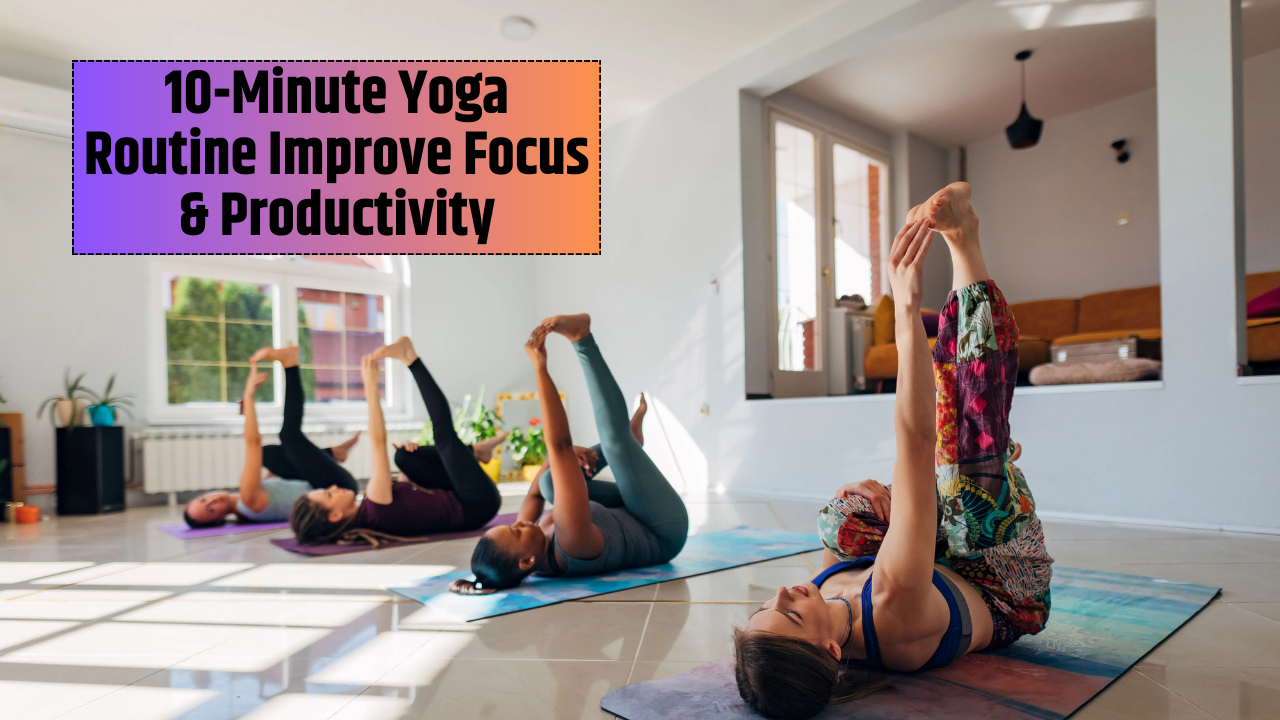

Staying focused in 2026 feels a bit like trying to read a book in the middle of Times Square noise everywhere, attention pulled in a dozen directions, and the mind quietly buzzing even when the world looks still. That scattered feeling doesn’t just come from workload; it’s the micro-distractions, the doom-scrolling, the ping-ping-ping of apps fighting for our brains. And yet, sharpening focus doesn’t always require a full lifestyle makeover. Sometimes, ten minutes of intentional movement can do what an hour-long workout can’t: reset your mental circuitry. That’s where this crisp, beginner-friendly yoga routine slips in—quick enough to fit between meetings, simple enough to do in pajamas, surprisingly effective at bringing your brain back online.
Minute 1: Seated Breathing Awareness
You start exactly where you are—seated, spine tall, hands resting on your knees like you’re about to negotiate peace with your own thoughts. Closing your eyes, you inhale to a soft four-count and exhale for four. Nothing fancy, nothing Insta-yogi about it. Just breath. Slow, steady, almost stubbornly simple.
Within seconds, there’s a noticeable shift. Thoughts don’t disappear, but they stop racing each other. The breath signals your nervous system to downshift, making this minute the anchor for everything that follows.
Minute 2: Neck and Shoulder Rolls
If you sit at a desk all day, you know the neck-and-shoulder knot—the one that quietly hijacks concentration. Rolling your shoulders forward and back, tilting your head gently side to side, you’re not just stretching; you’re clearing static. These micro-movements loosen the muscles that often tense up during deep focus sessions. When the body relaxes, the brain stops firing internal “discomfort alerts,” giving you more clarity to think.
Minute 3: Cat and Cow Flow
Dropping into a hands-and-knees position, you move through slow inhales that arch the back and exhales that round it. This isn’t just a warm-up—it’s a breathing drill disguised as movement. The rhythm forces you into the present moment. No multitasking. No planning dinner. Just the spine, the breath, and a little internal quiet. For a routine meant to improve focus, this minute is a powerhouse.
Minute 4: Downward Facing Dog
From tabletop, you send your hips skyward into that familiar inverted V. Palms grounded, spine long, knees bent if needed. Holding for five slow breaths, you feel circulation wake up your body the way a splash of cold water wakes up your face. It’s energizing but not chaotic—a kind of organized alertness. You step out of this pose feeling switched on rather than wired.
Minute 5: Standing Forward Fold
Stepping forward into a gentle forward fold, you let the head hang heavy, the breath deepen. This pose acts like a brain rinse—fresh blood flow, reduced tension, softer thinking. Forward folds are often where people feel the first real exhale of the day, the kind that lets you release mental clutter you didn’t even know you were holding.
Minute 6: Warrior I
Now comes the balance-meets-strength moment. One foot steps back, arms stretch high, gaze fixes forward. Warrior I demands presence. You can’t wobble and daydream at the same time; the pose simply won’t let you. Your breath becomes the stability tool, your focus the anchor. This minute trains a kind of mental discipline that carries over into work and study.
Minute 7: Tree Pose
Standing tall, you shift your weight to one leg and place the opposite foot on your calf or thigh—never the knee. Hands come to the center of the chest. Your eyes fix on one point. And suddenly, the world narrows in. Tree Pose is concentration in physical form. You wobble? No big deal—reset. The whole point is the comeback. This pose teaches steadiness not just in balance but in mind.
Minute 8: Seated Forward Fold
Back down to the floor, legs extended, spine long, folding forward gently. This is the quietest minute so far. The breath deepens, the nervous system softens, and your internal pace drops to something human again. For focus work, this level of calm is gold—you can’t concentrate when your mind is on high alert.
Minute 9: Supine Twist
Lying on your back, one knee crosses over the body while the opposite arm falls open. A twist is both release and reset. By now your spine has moved in every major direction, and this gentle rotation helps unwind whatever tension is left. You switch sides, breathe deeply, and feel the mind break free from the leftover clutter of the day.
Minute 10: Corpse Pose
The grand finale is stillness. Flat on your back, arms at your sides, eyes closed, breath slow. One minute of doing absolutely nothing—sounds easy until you realize how rare it is. This final moment lets the brain absorb all the previous work. You rise from Corpse Pose not sleepy, but clear. Grounded. Collected.
Why This Routine Actually Works
Here’s the thing: yoga isn’t just stretching. It’s a neurological recalibration. Slow breathing drops cortisol. Balancing poses activate attention networks in the brain. Forward folds calm the parasympathetic system. You’re basically running a 10-minute software update for your mind.
And because it’s short, you’re far more likely to stick with it. No pressure. No excuses. Just 10 minutes that could shift your day.
Making It a Daily Habit
You don’t need equipment, flexibility, or a dedicated home studio just a corner of your room and the willingness to show up for a tiny slice of stillness. Morning sessions can sharpen you for the day; afternoon sessions cut through the mid-shift slump; evening sessions help you decompress without doom-scrolling.
Focus isn’t about forcing your brain to behave. It’s about consistently giving it space to breathe. This routine is that space—structured, grounding, and surprisingly powerful over time.
FAQs
Is this routine suitable for total beginners?
Absolutely. Every movement is gentle and accessible, with no advanced flexibility required.
How soon will I notice improved focus?
Some people feel clearer after the first session, but consistent practice over a couple of weeks yields stronger results.
Can I do this routine in the middle of a workday?
Yes, and it’s incredibly effective during lunch breaks or between long tasks.
What if I lose balance during Tree Pose?
Just reset and continue. The wobble is part of the focus-building process.
Do I need to warm up before starting?
Not for this sequence. It’s designed to ease you in gradually.
