

Stress creeps into the body long before we notice it. It settles into the shoulders after a long day, tightens the jaw around deadlines, coils in the spine after too many hours at a screen. And somewhere between the noise of notifications and the quiet moments we keep postponing, the body starts to whisper: slow down.
Yoga has been answering that call for thousands of years. Not with intensity or pressure, but with permission. Permission to breathe. Permission to let go. Permission to remember what calm feels like in a world that rarely pauses. The following ten poses aren’t athletic tests or flexibility challenges—they’re grounding tools, designed to soften the edges of your day and bring you back to yourself.
Whether you’re easing into your evening, taking a midday reset, or starting your morning gently, these shapes offer a direct line to relaxation.
1. Child’s Pose (Balasana)
Child’s Pose is the closest thing yoga has to a reset switch. You fold forward, tuck into yourself, and the world’s volume drops instantly.
How to do it:
- Kneel with big toes touching, knees apart.
- Lower your chest toward the floor.
- Extend arms forward and let your forehead rest.
- Breathe deeply for as long as you need.
Why it helps:
This pose releases tension in the back, shoulders, and neck while slowing the nervous system. It’s grounding, soothing, and accessible to every body.
2. Cat–Cow Pose (Marjaryasana–Bitilasana)
A rhythmic spinal wave that melts stiffness and brings awareness to each vertebra.
How to do it:
- Start on hands and knees.
- Inhale, arch your spine (Cow).
- Exhale, round your back (Cat).
- Repeat slowly for several rounds.
Why it helps:
The fluid motion relieves spinal tension, opens the chest, and anchors the mind in breath—a powerful combo for mental and physical ease.
3. Downward-Facing Dog (Adho Mukha Svanasana)
Often treated as a transition, Down Dog is a calming stretch for the entire body when you settle into it with intention.
How to do it:
- From hands and knees, lift hips into an inverted V.
- Press hands firmly, lengthen spine, reach heels back.
- Relax your neck and breathe.
Why it helps:
It lengthens the back body, improves circulation, and encourages steady breathing—instantly reducing tension.
4. Reclining Bound Angle Pose (Supta Baddha Konasana)
A gentle hip opener that feels like your entire body sighing in relief.
How to do it:
- Lie on your back.
- Bring soles of feet together.
- Let knees fall open naturally.
- Arms rest beside you, palms up.
Why it helps:
This posture calms the nervous system, opens the chest and hips, and promotes a soft, meditative stillness.
5. Legs Up the Wall (Viparita Karani)
One of the most restorative poses in yoga—and one of the easiest to do.
How to do it:
- Sit beside a wall, then swing your legs up.
- Lie back with arms relaxed at your sides.
- Close your eyes and breathe slowly.
Why it helps:
This pose improves circulation, reduces swelling in the legs, and eases physical and mental fatigue. A perfect end-of-day ritual.
6. Savasana (Corpse Pose)
The true test of relaxation: lying still and letting go completely.
How to do it:
- Lie on your back, arms open, legs relaxed.
- Close your eyes.
- Allow your breath to slow without forcing it.
Why it helps:
Savasana resets the nervous system and dissolves tension. It’s the body’s opportunity to fully absorb the benefits of your practice.
7. Seated Forward Fold (Paschimottanasana)
A gentle, grounding posture that releases the entire backside of the body.
How to do it:
- Sit with legs extended.
- Inhale, lengthen spine.
- Exhale, fold forward from the hips.
Why it helps:
This pose quiets the mind, eases anxiety, and stretches the back and hamstrings—great for people who carry stress physically.
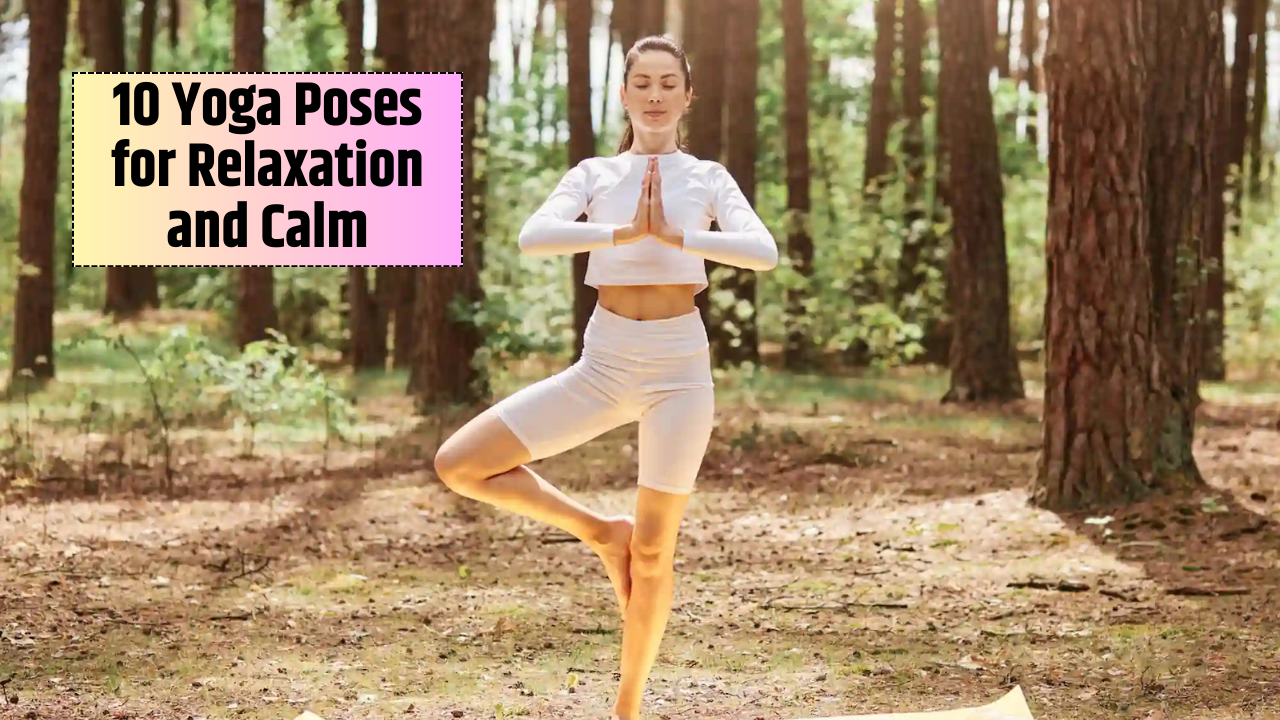
8. Tree Pose (Vrksasana)
A balancing pose that builds stability both inside and out.
How to do it:
- Stand tall.
- Place one foot on the opposite calf or thigh.
- Bring hands to heart or lift overhead.
- Breathe and switch sides.
Why it helps:
Tree Pose improves focus and stillness while grounding the body. The balance element gently trains the mind to remain calm in uncertainty.
9. Wide-Legged Forward Fold (Prasarita Padottanasana)
A deep, soothing stretch through the legs, hips, and spine.
How to do it:
- Stand with legs wide.
- Inhale, lengthen.
- Exhale, fold forward.
- Relax your head and neck.
Why it helps:
Forward folds calm the nervous system and release lower-body tension—perfect for unwinding after long periods of standing or walking.
10. Cat–Cow with Breath Awareness
A mindful twist on the classic Cat–Cow that turns movement into meditation.
How to do it:
Move through Cat and Cow slowly, matching each part of the movement precisely with your inhale and exhale.
Why it helps:
Focusing on breath deepens relaxation, releases tension more effectively, and returns your mind to the present moment.
Quick Reference Table
| Pose | Primary Benefit | Best For |
|---|---|---|
| Child’s Pose | Nervous system calming | Stress, overwhelm |
| Cat–Cow | Spine mobility | Morning stiffness |
| Downward Dog | Full-body lengthening | Circulation boost |
| Reclining Bound Angle | Hip opening, relaxation | Anxiety |
| Legs Up the Wall | Restorative recovery | Fatigue, swelling |
| Savasana | Deep relaxation | End-of-day reset |
| Seated Forward Fold | Mental calm | Anxiety, tension |
| Tree Pose | Balance + focus | Mental grounding |
| Wide-Legged Fold | Back + leg release | Tightness, stress |
| Cat–Cow w/ Breath | Mind-body connection | Meditation boost |
Relaxation isn’t something you “fit in” when life allows it. It’s something you create space for. These ten yoga poses offer a gentle, accessible way to ease tension and reconnect with yourself—no special equipment, no perfect form, no rush required.
A few quiet minutes on the mat—or the floor beside your bed—can shift the entire tone of your day. With consistent practice, you’ll notice your breath deepen, your shoulders soften, your sleep improve, and your sense of calm sharpen.
Relaxation isn’t passive. It’s a practice. And it starts with one mindful inhale at a time.
FAQs
How long should I hold relaxation poses?
Anywhere from 1 to 5 minutes, depending on comfort and time available.
Can beginners do all these poses?
Yes. Every pose listed is beginner-friendly with easy modifications.
When is the best time to practice?
Morning for clarity, evening for decompression whenever your schedule allows.
Do I need props?
No, but pillows, blankets, or blocks can make poses even more comfortable.
How often should I practice for relaxation?
Daily if possible, even for 5 minutes. Consistency calms the nervous system.
