

Waking up with a stiff back or tight shoulders? You’re not alone. Long hours at a desk, too much screen time, and lack of movement can leave the body feeling heavy and restricted. The good news is that you don’t need intense workouts to loosen things up. Gentle yoga stretches can do wonders. In fact, just a few minutes of mindful movement each day can help release stiffness, improve flexibility, and restore a sense of ease in your body.
Yoga works because it combines slow stretching with controlled breathing. This approach increases circulation to tight muscles while encouraging joints to move through their natural range. Over time, regular practice can help reduce everyday aches and improve overall mobility.
Why Yoga Helps Relieve Stiffness
When the body stays in one position for too long—like sitting at a desk or looking down at a phone—muscles tighten and joints become less mobile. Yoga helps reverse that process by gently stretching muscles and encouraging healthy movement patterns.
Some of the biggest benefits include:
- Increased blood flow to stiff muscles
- Improved joint mobility and flexibility
- Reduced tension caused by prolonged sitting
- Better posture and spinal alignment
- Lower risk of everyday aches and minor injuries
Even beginners can experience noticeable improvements with consistent, gentle practice.
What Makes These Poses Beginner-Friendly
Not all yoga poses require extreme flexibility or strength. The poses in this routine are simple, slow, and adaptable. Most can be modified depending on your comfort level.
| Feature | Why It Helps Beginners |
|---|---|
| Gentle stretching | Prevents strain on tight muscles |
| Slow breathing | Helps relax the nervous system |
| Low impact | Protects joints and reduces injury risk |
| Easy modifications | Allows people of all fitness levels to participate |
Practicing these poses regularly—even for 10 minutes—can gradually loosen tight areas of the body.
1. Mountain Pose
Mountain Pose may look simple, but it sets the foundation for proper posture and body awareness.
Stand tall with your feet together or hip-width apart. Relax your shoulders, keep your spine long, and let your arms rest naturally at your sides. Focus on steady breathing.
Benefit: Improves posture and encourages better body alignment.
2. Standing Forward Fold
From a standing position, slowly hinge at your hips and fold forward. Let your head hang naturally and keep a slight bend in your knees if your hamstrings feel tight.
This pose gently decompresses the spine and stretches the back of the legs.
Benefit: Releases tension in the lower back and hamstrings.
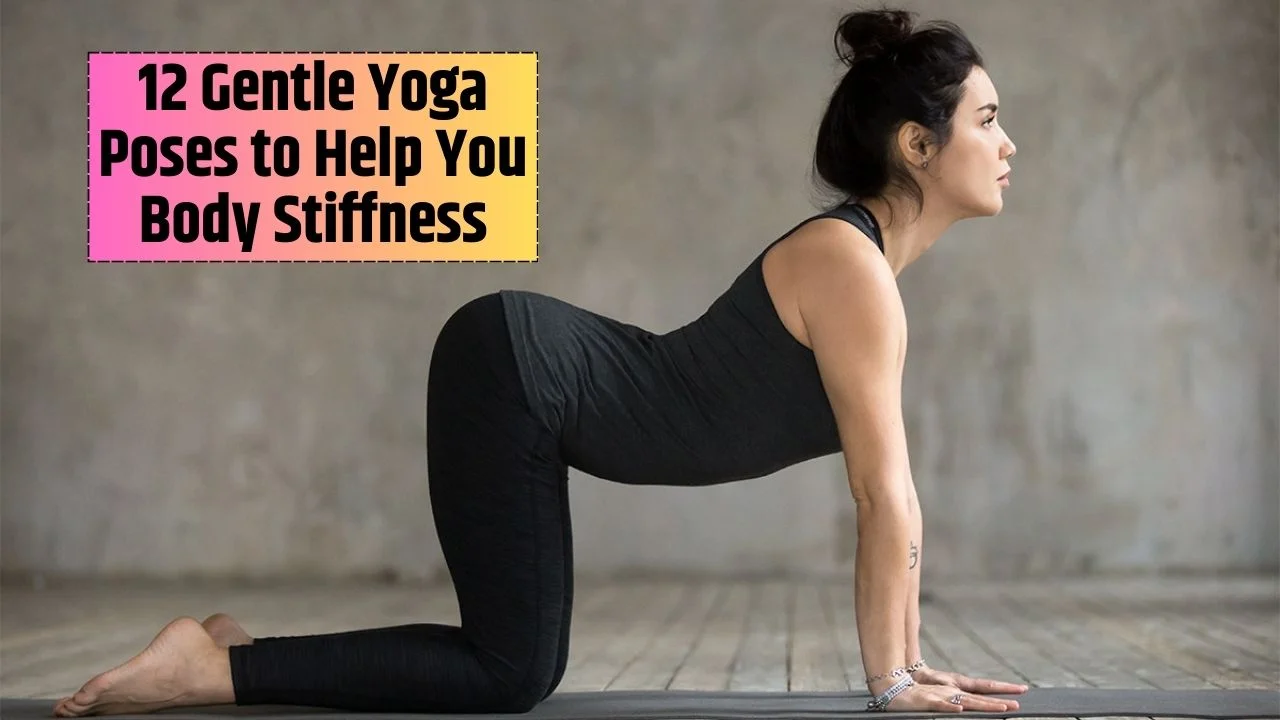
3. Cat–Cow Stretch
Start on your hands and knees. As you inhale, drop your belly and lift your chest for Cow Pose. As you exhale, round your back and tuck your chin for Cat Pose.
Moving slowly between these two positions helps mobilize the spine.
Benefit: Improves spinal flexibility and reduces back stiffness.
4. Downward Facing Dog
From hands and knees, lift your hips upward to form an inverted “V” shape. Keep your arms straight and your head relaxed between your shoulders.
Your heels don’t have to touch the floor—slight bending of the knees is perfectly fine.
Benefit: Stretches the entire body, especially shoulders, calves, and the spine.
5. Low Lunge
Step one foot forward between your hands and lower the opposite knee to the floor. Lift your chest and keep your torso upright.
Many people carry tightness in the hips due to prolonged sitting, and this pose helps counter that.
Benefit: Opens hip flexors and reduces stiffness in the hips.
6. Seated Forward Bend
Sit on the floor with your legs extended in front of you. Keep your back long as you gently reach toward your feet.
The goal is not to force the stretch but to gradually lengthen the spine.
Benefit: Improves flexibility in the hamstrings and back.
7. Reclining Twist
Lie on your back and draw one knee toward your chest. Slowly guide it across your body while turning your head in the opposite direction.
Twists help release tension built up in the spine and waist.
Benefit: Relieves lower-back tightness and improves spinal mobility.
8. Child’s Pose
Kneel on the floor and sit back onto your heels while stretching your arms forward. Rest your forehead gently on the floor or a cushion.
This pose allows the entire body to relax.
Benefit: Stretches the hips, thighs, and back while calming the mind.
9. Cobra Pose
Lie face down with your palms under your shoulders. Press gently through your hands to lift your chest while keeping your hips grounded.
Avoid pushing too high—this is a gentle backbend.
Benefit: Opens the chest and helps counteract slouching.
10. Butterfly Pose
Sit with the soles of your feet touching and allow your knees to fall outward. Hold your feet and sit tall through the spine.
If your hips are tight, you can place cushions under your knees for support.
Benefit: Improves hip flexibility and promotes circulation.
11. Legs Up the Wall
Lie on your back with your legs extended vertically against a wall. Allow your arms to relax at your sides.
This pose is incredibly restorative and helps reduce fatigue.
Benefit: Encourages blood flow back toward the heart and relieves tired legs.
12. Final Resting Pose
Lie flat on your back with your arms relaxed at your sides. Close your eyes and focus on slow, deep breathing.
This final pose allows the body to absorb the benefits of the entire practice.
Benefit: Promotes relaxation and recovery.
A Simple Daily Routine
If you’re short on time, you don’t need to do all twelve poses every day. Even a short sequence can help loosen stiff muscles.
| Time Available | Suggested Poses |
|---|---|
| 5 minutes | Mountain, Cat–Cow, Child’s Pose |
| 10 minutes | Forward Fold, Low Lunge, Cobra |
| 15 minutes | Full routine with relaxation |
Consistency matters more than intensity. Practicing a little every day is more effective than long sessions once in a while.
Stiffness is often the body’s way of asking for movement. Gentle yoga provides a simple and effective way to restore mobility without stressing your joints or muscles. These twelve beginner-friendly poses gradually stretch tight areas, improve circulation, and help the body move more freely.
The best part? You don’t need a studio, expensive equipment, or advanced experience. Just a quiet space, a few minutes of your time, and a willingness to move slowly and breathe deeply.
Over time, these small daily movements can make a big difference—helping you feel lighter, more flexible, and more comfortable in your own body.
FAQs
How long should I hold each yoga pose?
Holding each pose for about 20–30 seconds is a good starting point. You can gradually increase the duration as your flexibility improves.
Can beginners practice these yoga poses safely?
Yes. These poses are beginner-friendly and designed to gently improve mobility without intense strain.
Is it better to practice yoga in the morning or evening?
Morning practice helps wake up the body, while evening sessions can release tension from the day. Either time works well.
Do I need a yoga mat to perform these poses?
A yoga mat is helpful for comfort and stability, but a soft surface like carpet can also work.
How long does it take to see improvement in flexibility?
With consistent practice, many people begin noticing reduced stiffness and improved flexibility within a few weeks.
