
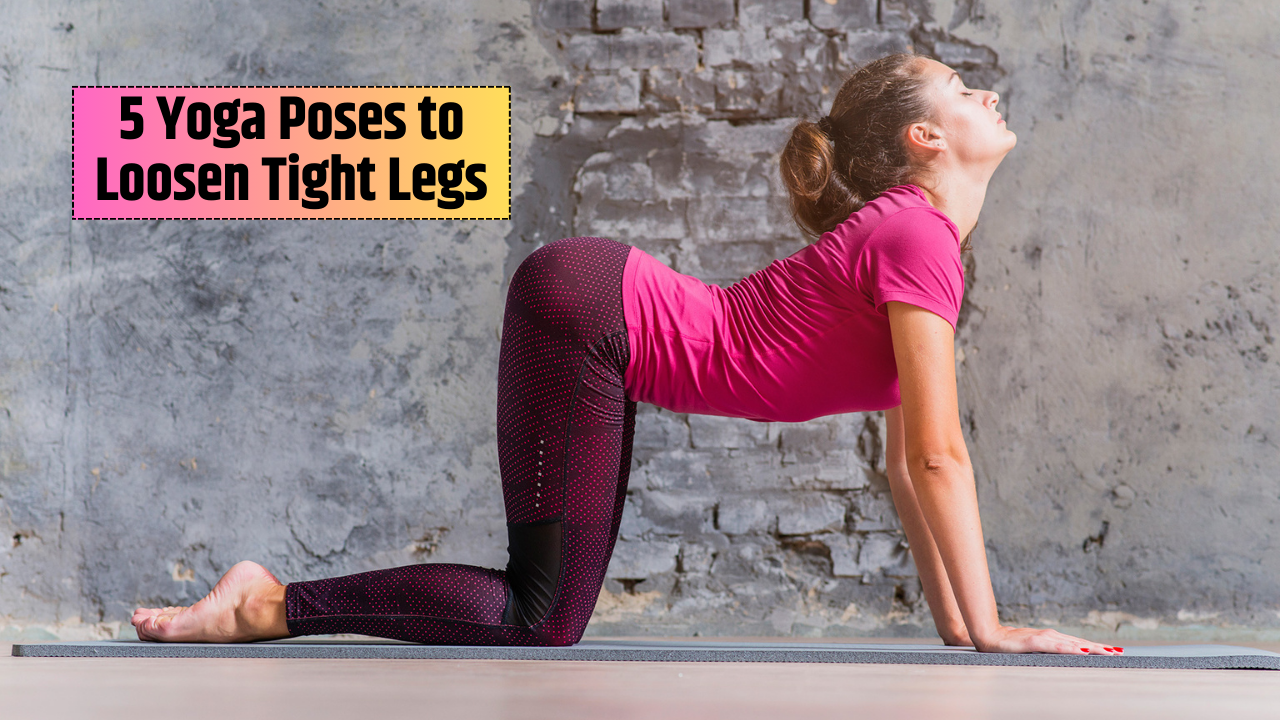

Stiff legs have a quiet way of derailing your day almost like an unexpected dip in the markets that throws off your entire trading plan. One minute you’re powering through emails, the next you stand up from your chair and realize your hamstrings have staged a revolt. It’s subtle, gradual, and almost always tied to the same modern culprits: marathon desk hours, low hydration, stress that hangs around like background noise, and exercise routines that skip the warm-up in the name of “saving time.” Yet the fallout is real. Stiff legs change your posture, your gait, even how long you can sit before discomfort starts whispering in the background.
But here’s the game changer—relief doesn’t demand intensity. It’s not a bootcamp situation. It’s more like rebalancing a portfolio: small, consistent shifts create long-term stability. And yoga, surprisingly understated in the world of wellness, offers exactly that kind of recalibration. Slow stretches, deliberate breathing, and basic poses can loosen tight legs the same way a good fiscal policy loosens credit markets—gently, predictably, and with better results than people expect.
Why Leg Stiffness Creeps Up Over Time
If you track the data, the trend line is obvious: our bodies were engineered for movement, but our lifestyle behaves like a stubborn bear market. Sedentary hours pile up, mobility shrinks, and eventually your calves, quads, and hips log their complaints.
Contributing Factor | What It Does
Sitting too long | Shortens hamstrings and hip flexors
Standing too long | Tightens calves, ankles, and the lower back
Repetitive workouts | Overworks select muscle groups
Stress or anxiety | Creates tension patterns across hips and thighs
Dehydration | Reduces muscle elasticity and slows recovery
What’s more interesting—almost counterintuitive—is that once your movement becomes limited, your nervous system follows suit. The brain starts behaving like it “forgot” how to release certain muscles. That’s where yoga re-enters the narrative, not as a workout trend, but as a neuromuscular retraining tool. Slow, mindful motion lets your body re-learn the very idea of ease.
How Yoga Resets Tight Leg Muscles
People tend to think yoga is about flexibility, but in practice, it’s about familiarity—getting your body reacquainted with range, breath, and space. From a physiological angle, yoga helps your stiff legs through:
Breath-led muscle release: Deep breathing signals your parasympathetic nervous system to dial down tension. Think of it as lowering interest rates—your whole system softens.
Better circulation: Movement pulls oxygen-rich blood back into areas that have been running on fumes.
Gentle lengthening: No bouncing, yanking, or ego-driven stretching. Just gradual extension that respects your limits.
Repatterning tension: Over time, yoga rewrites muscle-memory patterns, replacing tightness with mobility.
Below are five beginner-friendly poses that work like a targeted stimulus package for tight legs—steady, reliable, and effective.
1. Forward Fold (Uttanasana)
Stretches: Hamstrings, calves, spine
This is the stretch that shows up in nearly every yoga class for a reason—it decompresses the entire posterior chain. If you’ve ever stood up after hours at your desk and felt like your legs aged ten years, this pose is the antidote.
How to do it:
Stand with your feet hip-width apart.
Hinge from the hips, not the waist, and let your upper body drape downward.
Let your head go heavy.
Keep your knees as soft as needed.
Why it helps: Desk-bound days shorten everything from your back to your calves. Forward fold gently lengthens those structures while the inversion calms the nervous system.
Pro Tip: Forget touching the floor. Aim for release, not range.
2. Low Lunge (Anjaneyasana)
Stretches: Hip flexors, quads, groin
If sitting were a stock, it’d dominate global indices—but it’s also the number-one culprit behind tight hip flexors. Low lunge works like a reset button.
How to do it:
Step one foot forward and bend the front knee.
Drop the back knee to the floor.
Lift your chest and ground through your front foot.
Why it helps: Modern life chronically shortens the front of the thighs and hips. This pose lengthens what’s been compressed all day.
Modifications: Add blocks or a cushion under the back knee—support is strategy, not weakness.
3. Wide-Leg Standing Forward Bend (Prasarita Padottanasana)
Stretches: Inner thighs, hamstrings, calves
Think of this as a multi-sector stretch—diversified, comprehensive, and efficient.
How to do it:
Stand with your feet wide.
Fold forward from the hips.
Place your hands on the floor, a block, or your calves.
Why it works: Tight inner thighs often fly under the radar but can influence everything from your stride to your lower back alignment. This pose restores mobility where it’s often missing.
Pro Tip: Keep your spine long; blocks are your friend.
4. Reclined Hand-to-Big-Toe Pose (Supta Padangusthasana)
Stretches: Hamstrings, calves, lower back
If you’ve ever ended a long day with legs that feel like they’re wrapped in invisible tape, this pose offers immediate relief.
How to do it:
Lie on your back.
Lift one leg and loop a strap or towel around your foot.
Gently guide the leg toward you.
Why it helps: Because you’re on the ground, the body naturally relaxes, allowing deeper release with zero strain.
Tip: A straight leg is optional—comfort comes first.
5. Garland Pose (Malasana)
Stretches: Ankles, calves, inner thighs, hips
This deep squat is the mobility benchmark most adults lose without noticing. Yet it’s foundational—kind of like liquidity in a functioning market.
How to do it:
Stand with your feet slightly wider than hips.
Drop into a squat.
Bring your hands together; use elbows to open the knees.
Why it helps: It unlocks mobility across multiple zones—hips, ankles, inner thighs—all crucial players in how efficiently your legs move.
Modifications: If your heels lift, slip a folded blanket underneath.
Practicing Safely with Tight Legs
Stiff legs aren’t stubborn; they’re cautious. Move them too quickly and they tense up. But coax them with consistency, and they open.
Start slow. Stay longer rather than deeper.
Use props—they’re like leveraging tools, not shortcuts.
Warm up lightly before stretching; a short walk does wonders.
Match your breath to your movement.
Repeat 10–15 minutes a few times weekly for real, measurable change.
Leg stiffness isn’t just a nuisance—it can quietly distort posture, disrupt gait, and increase injury risk. But it’s also reversible. That’s the encouraging part. With steady practice and a willingness to meet your body where it is, you can reclaim flexibility, comfort, and a more fluid stride. These five poses are a low-cost, high-impact starting point—no equipment, no pressure, no contortions. Just breath, movement, and a willingness to start.
FAQs
Can yoga really loosen stiff leg muscles?
Yes. Consistent practice improves blood flow, muscle length, and nervous system relaxation.
How often should I do these poses?
Aim for 3–5 sessions a week, even if each lasts just 10–15 minutes.
Is bending the knees in a forward fold okay?
Absolutely. Slight bend protects the lower back and supports deeper hamstring release.
Can these poses help with walking or climbing stairs?
Yes. Looser muscles improve stride mechanics and reduce knee and hip strain.
Do I need to be flexible to start?
Not at all. These poses are designed for beginners and adjust easily with props.
