
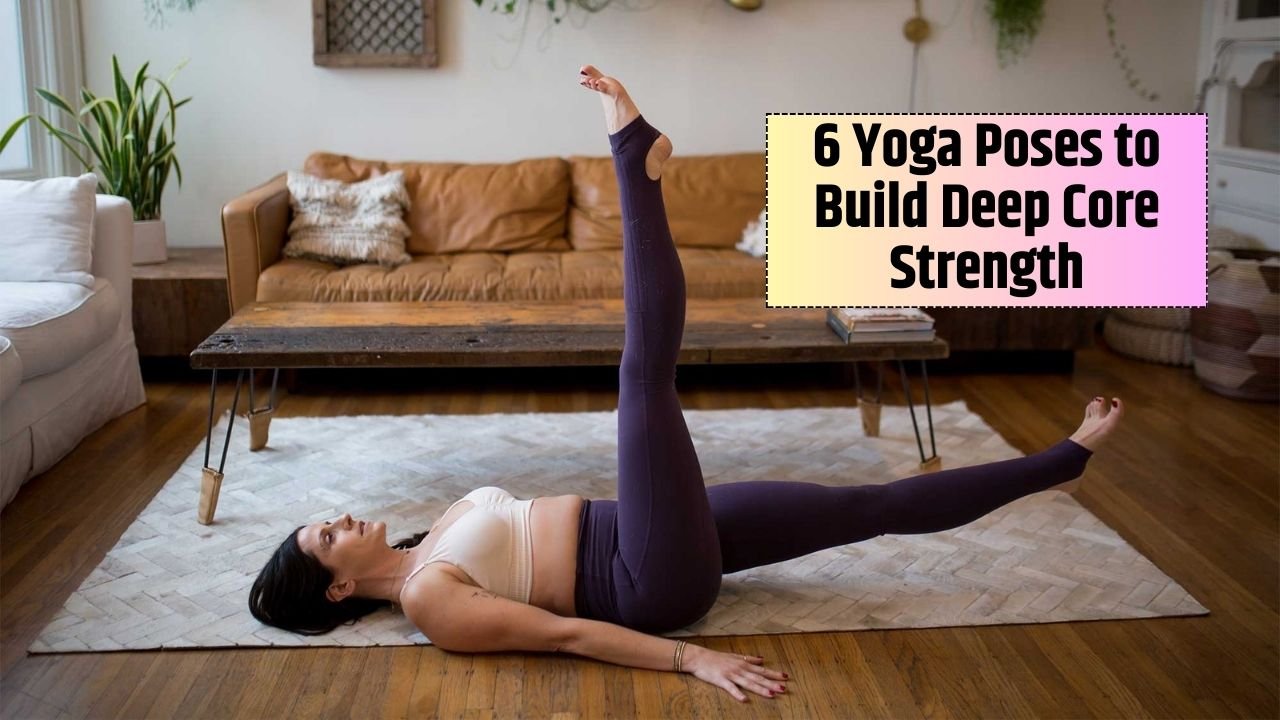

A strong core isn’t something you see first it’s something you feel first. It’s the quiet support system behind your posture, your balance, your stability, and the ease (or struggle) of everyday tasks. When the core is weak, the lower back takes on too much responsibility, the hips tighten, and simple movements—twisting, reaching, lifting—start to feel heavier than they should. Yoga approaches core strength in a way that trains not just the visible muscles but the deeper stabilizers that truly matter. Slow holds, controlled transitions, and steady breathing build power that’s both functional and sustainable.
Plank Pose
Plank is the baseline test of core integrity. From hands and knees, step your feet back until your body forms a clean line—head, shoulders, hips, heels. Press the floor away as if you’re trying to lift out of your shoulders.
Draw the belly inward, but don’t grip or hold your breath. The goal is a long, strong line that stays steady with each inhale and exhale. Start with 20–40 seconds; increase only when the alignment stays clean. Plank teaches the body how to stabilize from the center.
Boat Pose
Boat Pose always seems easier until you actually lift your feet. Sit tall, lean back slightly, and float your shins parallel to the ground. If you’re ready, straighten the legs—but not at the expense of your spine rounding.
The shaking that shows up? Completely normal. It’s your stabilizers switching on. Focus on length: long spine, long legs, long breath. Hold for several breaths, release with control, and you’ll feel the heat right away.
Side Plank
Side Plank is core strength with a twist—literally. Roll onto one hand and the outer edge of your foot. Stack your feet (or stagger them) and reach your top arm upward.
Your obliques fire to keep your hips lifted; your core stabilizes to prevent wobbling. Hold for 15–30 seconds before switching sides. This pose is gold for waistline support, posture, and overall spinal health.
Forearm Plank
Forearm Plank takes the engagement a layer deeper. Lower onto your forearms, elbows under your shoulders. Press down through your forearms and activate your legs.
Draw your ribs in, avoid letting the hips drift up, and breathe slowly. Even 20 seconds feels intense because the transverse abdominis—the deep corset-like muscle—is doing heavy work. This is the kind of strength that protects your lower back.
Bridge Pose
Core strength wraps around the entire torso, not just the front. Bridge develops the posterior chain—the glutes, lower back, and hamstrings—all crucial for spinal support.
Lying on your back, lift your hips by pressing into your heels. Think of length through the spine rather than height alone. Draw your ribs inward to prevent over-arching. This pose creates balanced support and reduces the strain that weak core muscles put on the spine.
Warrior III
Warrior III is where balance, strength, and control meet. Shift onto one leg, hinge forward, and lift the opposite leg behind you until your body forms a straight line.
Your standing leg fires to stabilize, your hips square forward, and your belly pulls inward to prevent wobbling. This pose builds functional strength—the kind you feel in daily life when reaching, lifting, or turning.
Why Core Control Matters
A powerful core doesn’t just make movement easier—it makes movement smarter. When your core supports you properly, energy transfers smoothly between the upper and lower body. You don’t waste effort, your posture improves, and the strain on your lower back diminishes.
Yoga’s approach works because it balances strength with mobility. You build power without creating rigidity. You learn control without sacrificing fluidity. If you’re new to these poses, start with shorter holds and repeat the sequence once or twice. As your endurance grows, lengthen the holds or link them together.
Consistency is the real secret. Even a few minutes, practiced several times a week, can transform how your body feels and moves.
A strong core isn’t loud. It’s supportive, steady, and deeply functional—helping you move with confidence and ease every single day.
FAQs
How often should I practice these poses?
Aim for three to four times per week for steady strength improvement.
Do I need equipment for core-focused yoga?
No. Your body weight is enough; a yoga mat simply adds comfort.
How long should I hold each pose?
Start with 20–30 seconds and increase as your stability improves.
Can yoga help reduce lower back pain?
Yes strengthening the core and glutes supports the spine and may ease strain.
Are these poses suitable for beginners?
Absolutely. Modify as needed by bending knees or shortening holds.
